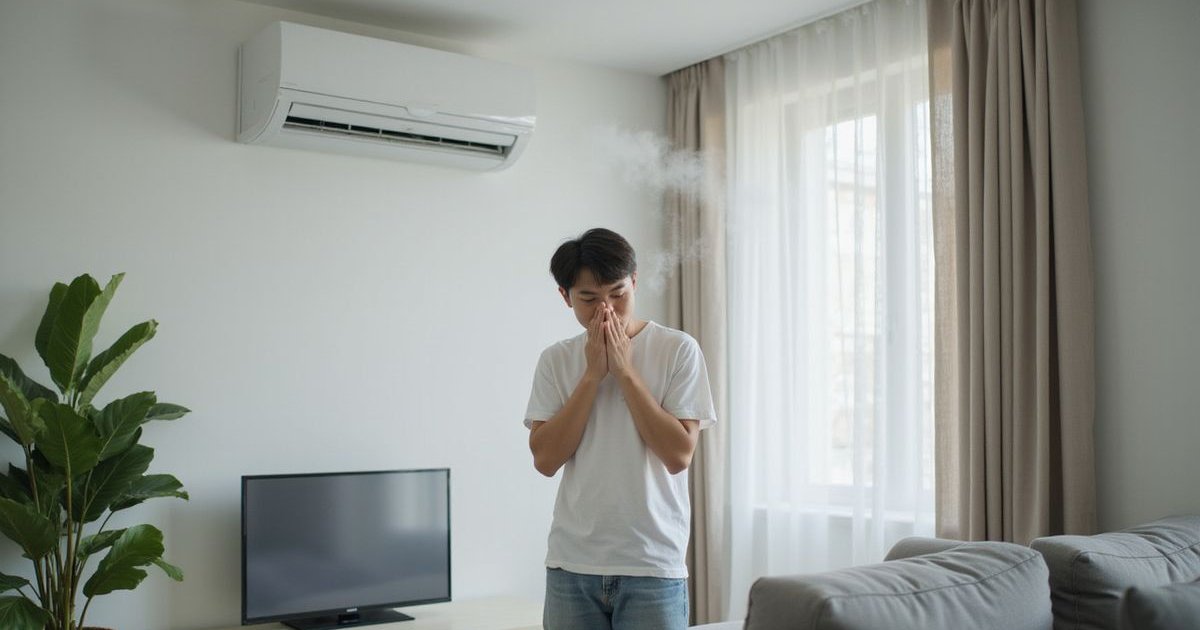
When you switch on your air conditioner in Kuala Lumpur’s heat, you expect instant relief, not a foul stench hitting your face.
We know exactly how frustrating this is because our team encounters it daily across the Klang Valley.
This smell is almost always a distress signal from your unit.
From our experience servicing thousands of homes in Kepong and Mont Kiara, the specific odor tells us exactly what is wrong before we even open the cover.
You can often diagnose the severity of the issue just by identifying the scent profile.
Here is the complete breakdown of what those odors mean and how our team resolves them.
Smell #1: Musty or Moldy
What it smells like: Damp basement, old books, locker room, wet socks
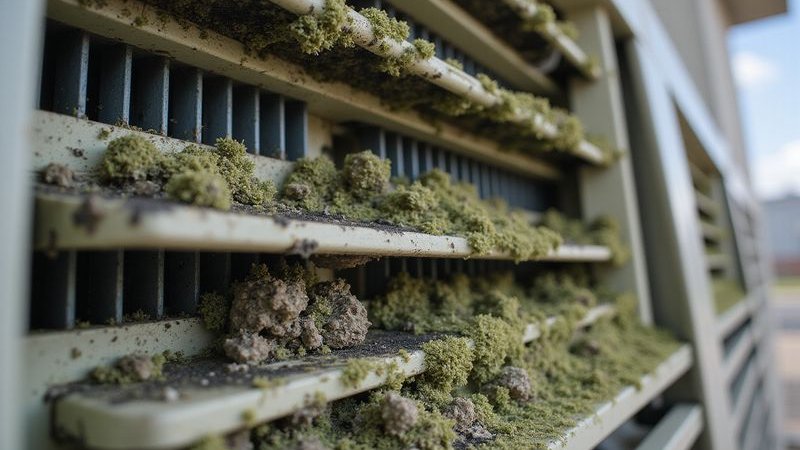
The cause: Fungal growth, specifically Aspergillus or Cladosporium mold, thriving inside the unit.
We see this most often in Malaysia because our indoor relative humidity consistently hovers between 60% and 70%.
Where it grows:
- Evaporator coil (the cooling fins)
- Blower fan (the rolling drum)
- Drain pan corners
- Styrofoam insulation inside the blower housing
Health concern: High. These spores circulate through your room and can aggravate rhinitis, asthma, and sinus infections.
The fix: A standard general service is rarely enough for this.
Our technicians perform a Chemical Wash or “Overhaul” to dismantle the unit and pressure-wash the blower and coil.
Pro Tip: If you see black specks on your louvers (the swinging blades), the mold is likely already covering the blower fan inside.
Smell #2: Sour or Vinegary
What it smells like: Vinegar, sour milk, fermented fruit
The cause: A bacterial biofilm known in the industry as “White Slime” or Zoogloea.
This jelly-like substance forms when bacteria mix with the organic dust and water sitting in your condensate drain pan.
Also consider:
- A clogged drain pipe causing water to stagnate (very common in condos)
- Decomposition of trapped insect debris
- Bacterial buildup on the cooling fins
Health concern: Moderate. It indicates you are breathing air passed over a bacterial colony.
The fix: We chemically clean the drain pan and flush the drainage pipe to remove the biofilm blockage.
Smell #3: Dirty Socks or Feet
What it smells like: Sweaty gym socks, cheese, locker room
The cause: Officially called “Dirty Sock Syndrome,” this is caused by bacteria accumulating on the aluminum coils.
We find this happens most frequently in guest rooms or units that are used intermittently.
In Malaysia: When you turn off an AC without drying it, the moisture sits on the coil for days, allowing bacteria to multiply before the next use.
Health concern: Low to Moderate. It is unpleasant but usually not toxic.
The fix: A deep chemical cleaning with an antibacterial coating is the most effective solution.
Smell #4: Burning or Electrical
What it smells like: Burning plastic, electrical fire, hot metal, ozone
The cause: This is often a failing Run Capacitor or an overheating fan motor.
Our technicians also find loose wiring connections that arc and melt the plastic terminal blocks.
Urgency: CRITICAL. You must stop using the unit immediately.
What to do:
- Turn off the AC using the remote.
- Switch off the main power switch (isolator) on the wall.
- Do not attempt to restart it.
- Call a professional immediately.
Health concern: Severe. This carries a high risk of fire and toxic smoke inhalation.
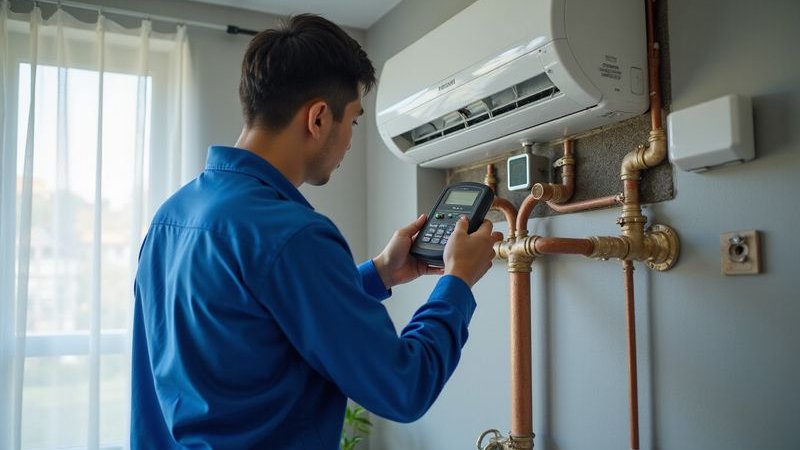
The fix: We will inspect the wiring, test the capacitor, and replace the burnt components.
Smell #5: Exhaust or Chemical
What it smells like: Car exhaust, paint thinner, sweet ether
The cause: A potential refrigerant leak from the copper pipes or evaporator coil.
While R410A and R32 gases are mostly odorless, the compressor oil that leaks out with them often has a distinct chemical smell.
Also consider:
- Outdoor pollutants being drawn in (if fresh air intake is open)
- Cleaning chemicals left behind from a previous service
- Glue or solvents from renovation work nearby
Health concern: High. Refrigerant displaces oxygen and can be harmful in closed bedrooms.
The fix: A pressure test with nitrogen is required to locate the leak, followed by welding or part replacement.
Smell #6: Rotten Eggs or Sulfur
What it smells like: Bad eggs, decaying meat, sewage
The cause: A dead pest, most commonly a House Gecko (Cicak) or occasionally a rat.
We frequently find that small lizards seek the warmth of the electronic board or crawl into the blower area and get trapped.
Also consider:
- Sewer gas backing up through a drain hose that lacks a proper P-trap
- Open plumbing vents near the compressor
Health concern: High. A decomposing animal introduces dangerous bacteria and parasites into your airflow.
The fix: The unit must be dismantled to remove the carcass and sanitized thoroughly.
Smell #7: Sweet or Antifreeze-like
What it smells like: Maple syrup, sweet chemical, chloroform
The cause: This is a classic sign of an R22 refrigerant leak in older air conditioners.
Newer units using R32 or R410A are less likely to smell “sweet,” but older models still in use across KL often exhibit this symptom when leaking.
Urgency: Medium-High. The efficiency of your unit will drop rapidly.
The fix: Leak detection and repair are necessary.
Smell #8: Dusty or Stale
What it smells like: Old attic, dry earth, unwashed clothes
The cause: Accumulation of fine dust on the filters and evaporator fins.
This usually happens when a unit is turned on after a long holiday or period of non-use.
Health concern: Low, but problematic for those with dust mite allergies.
The fix: Wash your filters immediately.
AC Odor Diagnostic Table
| Smell | Primary Suspect | Urgency | Professional Fix Required? |
|---|---|---|---|
| Musty / Moldy | Aspergillus Mold | Medium | Yes (Chemical Wash) |
| Sour / Vinegar | Zoogloea (Bio-slime) | Medium | Yes (Drain Flushing) |
| Dirty Socks | Bacteria on Coil | Low | Yes (Antibacterial Wash) |
| Burning Plastic | Capacitor/Wiring | HIGH | Yes (Electrical Repair) |
| Chemical / Gas | Refrigerant/Oil Leak | High | Yes (Leak Repair) |
| Rotten Eggs | Dead Cicak/Rat | High | Yes (Sanitization) |
| Dusty | Clogged Filters | Low | No (DIY Filter Clean) |
Immediate Steps When You Notice a Smell
For Burning or Chemical Smells:
- Power down the unit instantly.
- Turn off the wall switch to cut electricity completely.
- Open windows to ventilate the room.
- Contact a technician for an emergency inspection.
For Musty or Sour Smells:
- Check if the smell is constant or only at startup.
- Remove and wash the plastic filters with water.
- Shine a flashlight into the blower outlet to look for black mold spots.
- Schedule a chemical cleaning if mold is visible.
Why Store-Bought Air Fresheners Fail
Spraying perfume or using clip-on air fresheners is a temporary mask, not a cure.
Our team advises against this because:
- The moisture from sprays can actually feed the mold growth.
- It adds more chemicals to the air you breathe.
- The underlying bio-slime or mold continues to spread unchecked.
- The smell will return stronger once the fragrance fades.
How to Prevent Odors Returning
You can extend the freshness of your AC between services with these habits.
The “Fan Mode” Trick (Crucial for Malaysia):
- Switch your AC to “Fan Mode” (not Cool) for 20 minutes before turning it off.
- This dries out the moisture on the coil, starving mold and bacteria of the water they need to grow.
Weekly:
- Run idle units for 30 minutes to prevent stagnant water buildup.
Monthly:
- Wash your filters with water and mild soap.
Yearly:
- Schedule a Chemical Service (Chemical Wash) to remove internal buildup that normal servicing misses.
Eliminate AC Odors for Good
Living with a smelly AC affects your comfort and your health.
We specialize in deep cleaning and odor removal for residential units in Kepong, Mont Kiara, Desa ParkCity, and Kuala Lumpur.
WhatsApp us at 012-2252 623 to book a slot.
Our Full Chemical Overhaul includes:
- Complete dismantling of the indoor unit
- High-pressure chemical cleaning of the evaporator coil and blower
- Antibacterial treatment to kill Zoogloea and Mold
- Vacuuming of the drainage system
- Gas pressure check
Don’t breathe in mold spores another night.
Let us restore your air to being cool, clean, and odorless.