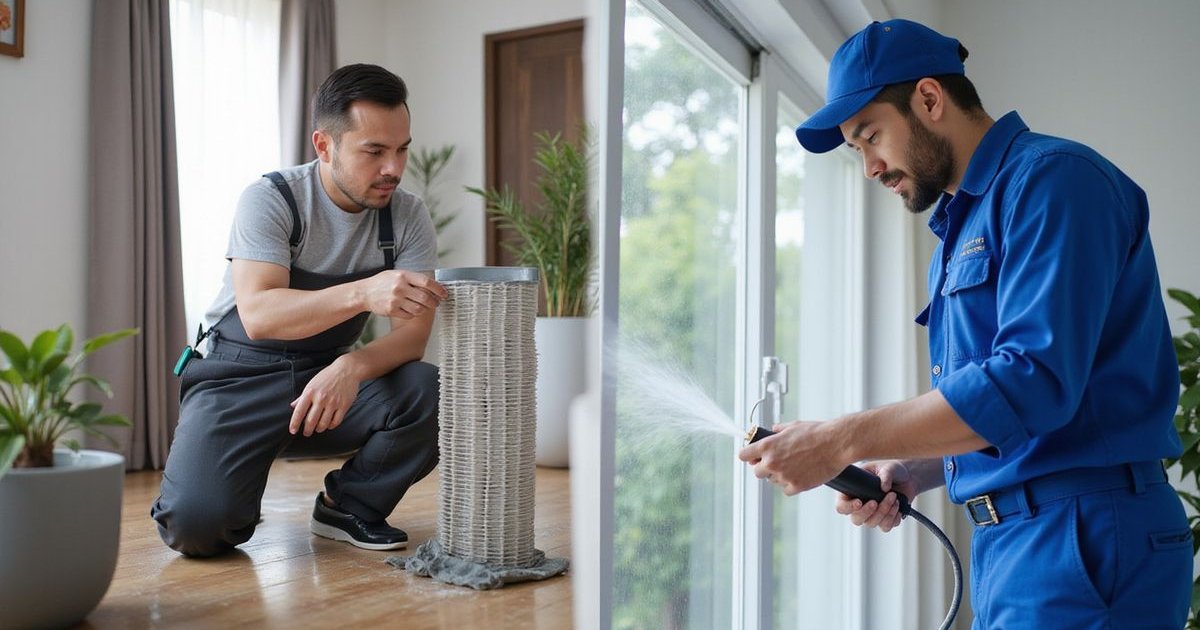
There is a lot of conflicting advice online about AC cleaning. Some sources claim you can handle everything yourself. Others insist you need professionals for even the smallest tasks. The reality for most homeowners in Kepong and Kuala Lumpur lies somewhere in the middle.
We have serviced thousands of aging units across the Klang Valley, and we see the same pattern repeatedly. The high humidity here—often averaging 80%—creates a specific “jelly” buildup in the drainage system that simple DIY sprays just cannot dissolve. This guide explains exactly what maintenance you can safely handle and when it is smarter to call in an expert.
What You CAN Do Yourself
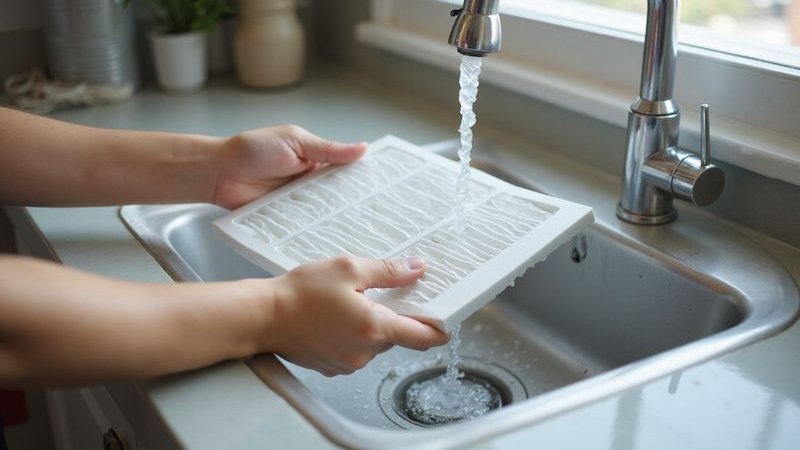
1. Filter Cleaning (Every 2-4 Weeks)
Difficulty: Easy Time: 10 minutes Tools needed: Water, mild soap (optional)
This is the single most impactful maintenance task you can perform. During Malaysia’s haze season or if you live near construction zones in Kepong, you might need to check this every two weeks.
- Turn off the AC power switch.
- Open the front panel carefully.
- Remove the filter mesh.
- Vacuum loose dust or rinse it gently under running water.
- Let it dry completely in a shaded area before reinstalling.
- Close the panel securely.
Tips:
- Avoid Direct Sunlight: Never dry your filters in the hot afternoon sun because the UV rays make the plastic mesh brittle and prone to tearing.
- Replacement Cost: If filters are torn, you can find replacements for RM15-RM40 at hardware stores like Mr. DIY or Ace Hardware.
- Energy Impact: A clogged filter restricts airflow, forcing your compressor to work harder and potentially pushing your electricity usage into the higher TNB tariff tiers (over 300 kWh).
2. Exterior Wipe Down (Monthly)
Difficulty: Easy Time: 5 minutes Tools needed: Damp cloth
We suggest wiping the exterior surfaces to prevent dust from being sucked back into the machine:
- Front panel and air intake vents.
- Top of the unit (often the dustiest part).
- Remote control display.
Caution: High humidity in Malaysia often causes remote control batteries to leak and corrode terminals. Check your battery compartment while you are wiping the remote.
3. Check for Obvious Issues (Weekly)
You should get into the habit of noticing small changes before they become expensive repairs:
- Airflow: Is the air coming out significantly weaker than usual?
- Sound: Do you hear a vibrating noise (loose cover) or a hissing sound (potential gas leak)?
- Smell: Is there a “sour vinegar” or “sweaty sock” odor? This usually indicates bacterial growth on the cooling coil.
- Leaks: Is water dripping from the corners of the indoor unit?
Early detection of these signs can save your wall paint and flooring from water damage.
4. Clear Outdoor Unit (Monthly)
For the outdoor condenser unit:
- Remove dried leaves or debris that may have gathered behind the unit.
- Ensure at least 30cm of clearance on all sides for heat dissipation.
- Trim back any potted plants that are blocking the airflow.
- Hose down the exterior fins gently if they look dusty.
What You Should NOT Do Yourself
1. Chemical Wash
Why not DIY:
- The “Jelly” Factor: In our humid climate, a thick biological slime forms in the drain tray. Surface sprays cannot reach or flush this out.
- Corrosion Risk: Many commercial coil cleaners are highly alkaline. If not rinsed properly with high pressure, they will corrode the delicate “Blue Fin” or “Gold Fin” coating on your unit.
- Reassembly Issues: We often fix units where homeowners broke the plastic clips or could not fit the casing back correctly.
Some people buy “3-in-1” chemical sprays and apply them to the cooling fins. This pushes dirt deeper into the coil rather than removing it. Proper chemical cleaning requires dismantling the unit to access the back of the cooling coil and the blower fan.
2. Refrigerant (Gas) Handling
Why not DIY:
- Legal Restrictions: Under Malaysia’s Environmental Quality Act, releasing refrigerants into the atmosphere is prohibited.
- Equipment Cost: You need manifold gauges and a vacuum pump to do this correctly.
- Precision Required: Modern units use R32 or R410A gas. Overcharging by even a small amount can destroy the compressor valves.
If your unit is not cooling but the fan is running, you likely have a gas leak that needs professional diagnosis, not just a top-up.
3. Electrical Repairs
Why not DIY:
- Safety Hazard: Domestic voltage is 240V, which is lethal.
- Pest Damage: Lizards often hide behind the circuit board (PCB) for warmth. A DIY attempt to check wiring can disturb them and cause a short circuit that fries the board.
- Warranty Void: Brands like Daikin and Panasonic state that unauthorized tampering with electrical components instantly voids the warranty.
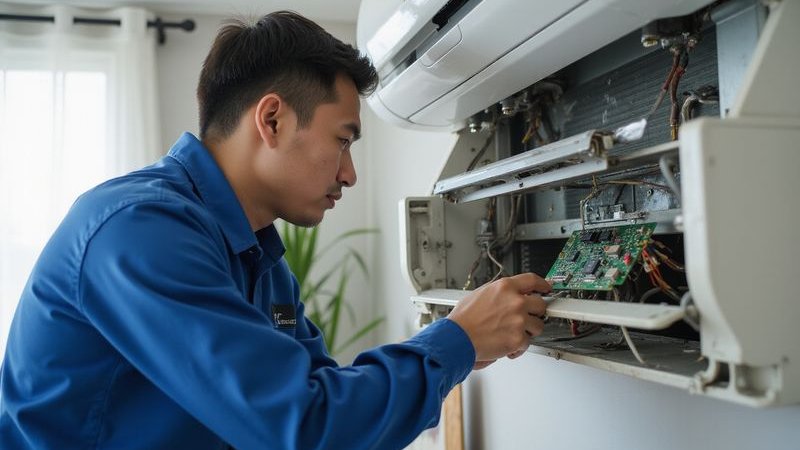
Any issue involving wiring, capacitors, or the blinking light on your display needs a certified technician.
4. Deep Internal Cleaning
Why not DIY:
- Blower Fan Balance: The cylindrical fan (blower) gathers heavy dust. Cleaning it unevenly causes it to wobble and vibrate noisily.
- Drain Pan Access: Removing the drain pan to clear the “jelly” blockage requires dismantling the entire front chassis.
- Water Damage: Without a proper canvas bag and water catching system, you risk flooding your electronics or ruining your wall.
DIY Products: What Works?
AC Foam Cleaners (Coil Cleaners)
Verdict: Limited effectiveness
These sprays, such as Mr. McKenic or generic hardware store brands, claim to clean the evaporator coil without disassembly.
- The Reality: They only clean the front surface of the fins.
- The Problem: They cannot reach the heavy dust buildup between the thick coil layers.
- The Risk: The chemical residue can turn into a sticky paste that attracts more dust later.
Use case: Helpful for very light maintenance on new units, but never a replacement for a yearly professional wash.
AC Sanitizer Sprays
Verdict: Temporary fix
These spray-on sanitizers can help mask odors temporarily:
- Action: They kill surface bacteria on the filters and vents.
- Limitation: They do not remove the mold colony growing inside the blower wheel.
- Result: The smell usually returns within 48 hours.
Use case: A quick fix before guests arrive.
Fin Combs
Verdict: Useful
These tools straighten bent aluminum fins on the outdoor condenser:
- Benefit: Straight fins allow better airflow and heat exchange.
- Caution: Older fins can be brittle. Brushing too hard can crumble the aluminum.
Use case: Good for correcting minor damage from high-pressure water jets or impact.
When to Call a Professional
| Situation | DIY Attempt? | Call Pro? |
|---|---|---|
| Dirty filter | Yes | No |
| Dusty exterior | Yes | No |
| Reduced cooling | Clean filter first | Yes, if persists |
| Water leaking | Check filter | Yes (likely blocked drain) |
| Bad smell | Try sanitizer | Yes, if persists (mold) |
| Strange noise | Check for loose items | Yes (fan/motor issue) |
| Not turning on | Check power/remote | Yes (PCB issue) |
| Ice on unit | Turn off unit | Yes (gas leak/dirty coil) |
The Cost Comparison
Let’s look at the financial impact using current Malaysian market rates and TNB tariffs.
DIY Approach (1 Year)
- Filter cleaning: RM0 (just your time).
- AC foam cleaner: RM35 x 2 cans = RM70.
- Hidden Cost: A dirty unit consumes 15-25% more energy. If this pushes your monthly usage from the 300kWh tier (33.40 sen/kWh) into the 600kWh tier (51.60 sen/kWh), you could pay an extra RM30-RM50 per month.
- Electricity Waste: ~RM360 per year.
Total Estimated Cost: RM430 + potential repair costs.
Professional Service (1 Year)
- Chemical wash (2x): ~RM180 x 2 = RM360.
- Inclusions: Gas pressure check and full drainage flush.
- Savings: Clean units run efficiently, keeping you in lower tariff blocks.
- Lifespan: Prevents premature compressor failure.
Total Estimated Cost: RM360 with peace of mind.
Our Recommendation
The ideal strategy combines your diligence with our technical equipment:
Monthly (DIY):
- Clean filters rigorously.
- Wipe down the exterior.
- Ensure the outdoor unit is clear of plants and debris.
Every 6-12 Months (Professional):
- Chemical wash to remove deep bio-slime.
- Gas pressure inspection.
- Drainage system flushing.
This combination keeps your AC efficient and catches problems before they require expensive parts replacement.
Common DIY Mistakes
We often have to fix issues caused by well-meaning attempts at maintenance:
- Running AC without a filter “to dry it out”: This sucks dust directly into the wet cooling coil, creating instant mud.
- Using high-pressure jets on fins: This bends the delicate aluminum sheets, permanently blocking airflow.
- Spraying WD-40 on squeaky fans: This attracts dust and can damage plastic bearings.
- Ignoring the outdoor unit: A blocked condenser causes the compressor to overheat and trip the safety switch.
- Drying filters with a hair dryer: The heat warps the plastic frame, making it impossible to fit back in.
Book a Professional Service
Ready for a proper cleaning? WhatsApp us at 012-2252 623 to schedule a service.
Our team handles the deep cleaning and technical checks while you manage the easy maintenance between visits. Most homeowners find this balance keeps their AC running efficiently year-round.
Free gas top-up included with every chemical wash service!