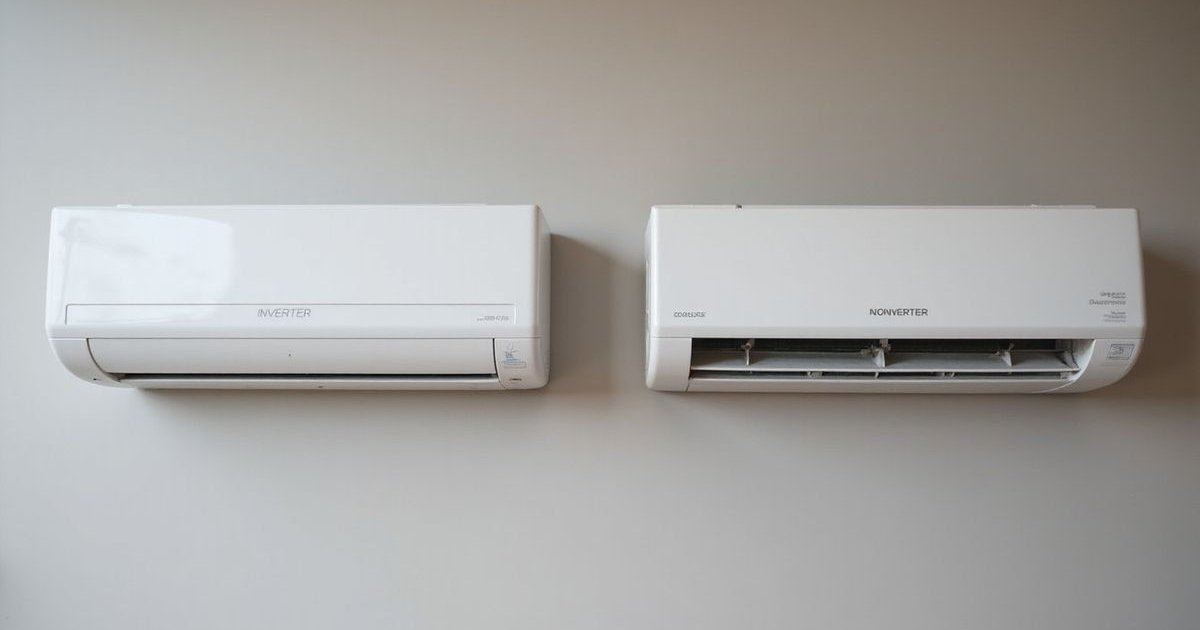
Shopping for a new air conditioner in Malaysia can feel overwhelming with all the technical jargon. The first big decision usually narrows down to one question: inverter or non-inverter? This single choice impacts your comfort and your Tenaga Nasional Berhad (TNB) bill for the next decade.
We have installed thousands of units across Kepong and Kuala Lumpur. Our team sees exactly how these different technologies perform in real Malaysian homes after years of use.
Here is the straightforward breakdown to help you make the right call for your home.
The Simple Explanation
You can think of the difference between these units like the accelerator in a car.
Non-inverter (Fixed Speed): This is stop-and-go traffic. You floor the gas pedal to reach a speed, then slam on the brakes to stop, then floor it again. The motor runs at 100% capacity or 0%. There is no middle ground.
Inverter (Variable Speed): This is highway driving. You press the gas to get up to speed, and then you lightly hold the pedal to maintain a steady pace. The motor slows down once the room is cool but never fully stops.
How They Work
Non-Inverter Operation
- Room temperature is 30°C.
- You set the AC to 24°C.
- The compressor kicks in at 100% full power.
- Once the room hits 24°C, the compressor shuts off completely.
- The room warms up to about 26°C or 27°C.
- The compressor blasts on again at 100%.
The Result: The temperature constantly swings up and down. You might feel too cold one minute and a bit sticky the next.
Inverter Operation
- Room temperature is 30°C.
- You set the AC to 24°C.
- The compressor runs hard to cool the room quickly.
- As it nears 24°C, the motor slows down to about 20-40% power.
- It cruises at this low speed to keep the temperature steady.
The Result: The temperature stays locked at 24°C.
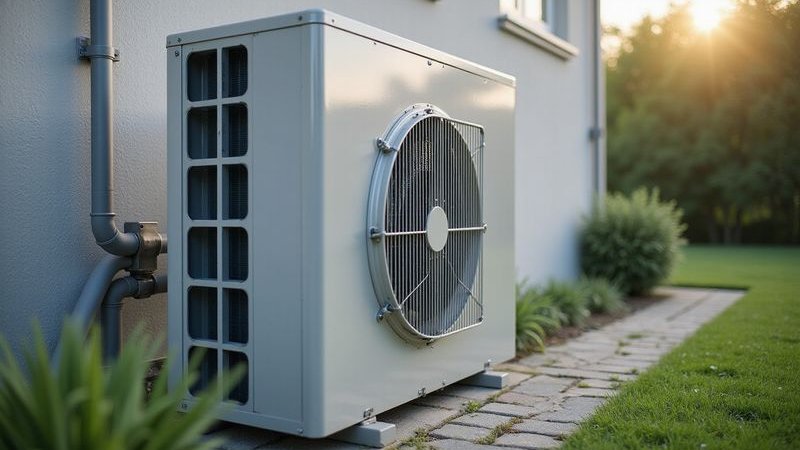
Electricity Cost: The Real TNB Numbers
Most homeowners in KL want to know if the extra upfront cost pays off. We calculated the numbers based on current electricity rates.
The Efficiency Gap
Inverter technology is far more efficient because starting a motor from a dead stop requires a massive surge of energy. A non-inverter does this huge “startup surge” dozens of times a night. An inverter only does it once.
| Type | Average Efficiency (EER) | Energy Waste |
|---|---|---|
| Non-inverter | 9-10 | High (Frequent startups) |
| Inverter | 13-18+ | Low (Steady cruising) |
Monthly Cost Example (2025/2026 Estimates)
Let’s look at a realistic scenario for a master bedroom in a terrace house.
- Unit: 1.5 HP Air Conditioner
- Usage: 8 hours every night
- Tariff: Est. RM0.516/kWh (Typical Tier 3 domestic rate + ICPT surcharges)
| AC Type | Average Consumption | Est. Monthly Bill |
|---|---|---|
| Non-inverter | ~320 kWh | RM165.12 |
| Inverter | ~195 kWh | RM100.62 |
Estimated Monthly Savings: ~RM64.50 Estimated Annual Savings: ~RM774.00
The Payback Period
An inverter unit typically costs RM500 to RM800 more than a non-inverter upfront.
- Extra Cost: RM700 (Average)
- Monthly Savings: RM64.50
- Time to Break Even: Roughly 11 months
You effectively earn your money back in less than a year of nightly use. After that first year, the savings go straight into your pocket.
Comfort and Noise Levels
Savings are great, but comfort is usually why people upgrade.
Temperature Stability
Non-inverter: You will notice the “drift.” The room gets chilly, the compressor cuts, and then the room gets stuffy before the cold air blasts again.
Inverter: The cooling feels consistent. There are no hot or cold blasts, just a steady, comfortable environment.
Humidity Control
Non-inverter: Humidity removal stops whenever the compressor turns off. This can make the air feel heavy or “muggy” during the off cycles.
Inverter: Because it runs continuously, it constantly pulls moisture from the air. The room feels drier and crisper, which is essential in our tropical climate.
Sleeping Soundly
Non-inverter: The “clunk-buzz” sound of the compressor kicking in can wake up light sleepers.
Inverter: These units are whisper-quiet once the room is cool. The outdoor unit hums along at a low frequency that is barely audible through a window.
The Maintenance Reality: What No One Tells You
We believe in being transparent about the downsides too. Inverters are smarter, but that intelligence comes with hardware risks specific to Malaysia.
The PCB Risk
Inverter units rely on a complex Printed Circuit Board (PCB) to manage the variable speed. These boards are sensitive to voltage fluctuations.
- The Risk: Malaysia experiences frequent lightning strikes and power surges. A bad surge can fry an inverter board.
- The Fix: We strongly recommend installing an outdoor starter with a built-in surge protector. It costs a little extra but saves the board.
Repair Costs
Replacing a capacitor on a non-inverter is cheap (often under RM150). Replacing a fried inverter PCB can cost RM400 to RM800 depending on the brand.
Insider Tip: Despite the higher repair cost for the board, the compressor on an inverter often lasts longer because it isn’t enduring the violent start-stop stress of a non-inverter.
When to Choose Non-Inverter
Inverter technology is superior, but it isn’t always the right financial move.
We recommend non-inverter models for:
- Guest Rooms: If the room is used only a few times a month, you will never recoup the extra upfront cost through energy savings.
- Rental Properties: If you are a landlord and the tenant pays the electric bill, a non-inverter is a lower initial investment with cheaper parts to replace if things break.
- Kitchens or Open Areas: In spaces with open windows or constant heat sources, the AC will run at 100% anyway. An inverter loses its efficiency advantage if it can never slow down.
Best Scenario: A spare bedroom that gets used twice a month for guests.
When to Choose Inverter
An inverter is the smart choice for:
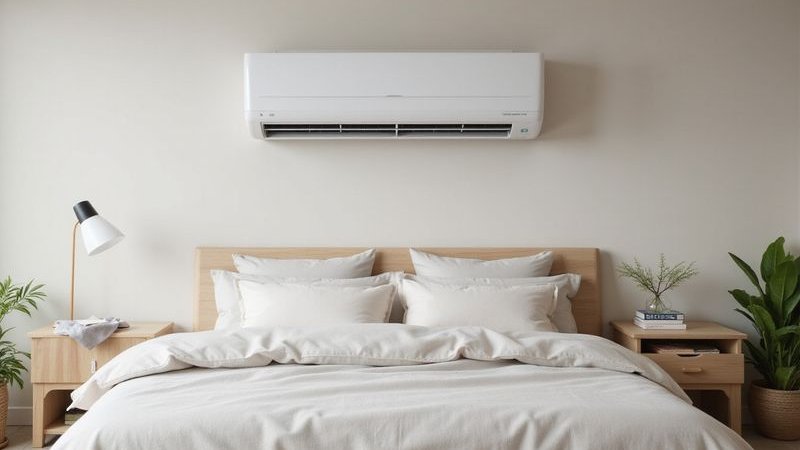
- Master Bedrooms: You use this every night. The noise reduction and consistent temperature make a huge difference in sleep quality.
- Home Offices: If you work from home, the unit might run 12+ hours a day. The electricity savings here are massive.
- Living Rooms: For families who spend weekends watching TV or relaxing in the main hall.
Best Scenario: Your master bedroom where you sleep 8 hours every night.
Brand Comparison in Malaysia (2025/2026)
Prices fluctuate, but here is where the major players currently stand in the local market.
Top Inverter Choices
| Brand | Est. Price (1.0HP) | Why We Like It |
|---|---|---|
| Daikin | RM1,450+ | Excellent parts availability and very reliable. |
| Panasonic | RM1,400+ | Nanoe-X technology helps with indoor air quality. |
| Mitsubishi Electric | RM1,600+ | incredibly durable and easy to clean (Easy Clean design). |
| Midea | RM1,150+ | A solid budget option that still offers energy savings. |
Top Non-Inverter Choices
| Brand | Est. Price (1.0HP) | Why We Like It |
|---|---|---|
| Acson | RM950+ | A local favorite. Parts are cheap and easy to find. |
| York | RM900+ | Simple, rugged workhorses. |
Understanding Star Ratings
You will see the Energy Efficiency Rating (EER) stickers on every unit.
- 5 Stars: almost exclusively Inverter models.
- 3 Stars: Typical for modern Non-inverter models.
- 2 Stars: Older or very basic technology.
Pro Tip: Do not just look at the stars; look at the number next to “Annual Energy Consumption” on the label. This gives you a direct comparison.
Frequently Asked Questions
”Is R32 gas better than R410A?”
Yes. R32 is the current standard. It conveys heat more efficiently, which lowers electricity usage. It is also easier to recycle. We highly recommend buying an R32 unit as R410A is slowly being phased out.
”Can I install an inverter on my old piping?”
Usually, yes. If your old copper piping is the correct thickness (0.61mm or thicker), we can flush the lines and reuse them. Our technicians always verify the pipe integrity before installation to prevent leaks.
”Why is my inverter AC not blowing ice-cold air immediately?”
This is normal behavior. An inverter ramps up speed gradually to protect the compressor. A non-inverter blasts 100% immediately. Give the inverter 5-10 minutes, and it will reach the desired temperature effectively.
Our Recommendation
For 90% of the homes we visit in Kepong and Mont Kiara, the answer is clear.
Buy an Inverter for:
- Bedrooms (Better sleep, huge savings).
- Living halls (Frequent usage).
- Home offices.
Buy a Non-Inverter for:
- Guest rooms.
- Rental units with short-term leases.
- Spots prone to very dirty air (like near a wet kitchen) where extensive chemical cleaning is needed often.
Need Help Sizing Your Unit?
Choosing the wrong horsepower can ruin the efficiency of even the best inverter. WhatsApp our team at 012-2252 623.
We provide:
- Free sizing consultation (photos or floor plan).
- Detailed ROI calculation for your specific usage.
- Installation by certified technicians who understand surge protection.
We service the entire Klang Valley, including Desa ParkCity, Kepong, and Mont Kiara. Let’s get your home cool and efficient.