7 Signs Your Aircond Needs a Chemical Wash (Don’t Ignore These!)
Your air conditioner doesn’t just stop working overnight; it usually gives you plenty of warning before it fails. Living in Kuala Lumpur, we know that a broken AC isn’t just an inconvenience—it’s a genuine emergency in our tropical heat. Learning to spot these early signals can save you from a sweaty night, prevent a massive AC repair bill, and keep your electricity costs in check.
Here are the 7 telltale signs your AC is screaming for a deep chemical wash.
Sign #1: Reduced Cooling Performance (The “24-Degree” Test)
What you notice: You used to feel comfortable setting the remote to 24°C, but now you have to crank it down to 20°C or 18°C just to feel the same chill.
Why it happens: In our humid Malaysian climate, dust mixes with moisture to form a thick layer of grime on your evaporator coil. This acts like a winter blanket for your AC, trapping the cold air inside the unit instead of releasing it into your room. We see this constantly in older units in Kepong; the machine is working, but the heat exchange is blocked.
The test: Try the “Temperature Drop” test. Measure the air temperature going into the top of your unit and the cold air coming out. If the difference is less than 8°C, your coils are likely suffocated by dirt.
Sign #2: Water Leaking from Indoor Unit
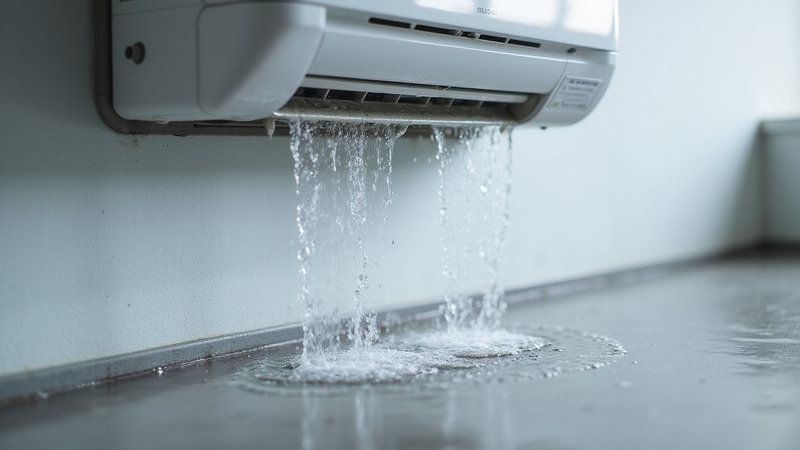
What you notice: Water is dripping—or pouring—from the indoor unit onto your wall, parquet floor, or furniture.
Why it happens: This is almost always caused by “bio-slime” (often called “jelly” by local technicians). In high-humidity areas like Mont Kiara, algae and bacteria grow in the drainage pan, forming a gelatinous sludge that blocks the drain pipe. When the water can’t flow out, it backs up and spills over.
The warning: Don’t ignore this! We have seen cases where a simple RM150 leak turned into thousands of Ringgit in damage to parquet flooring and plaster ceilings.
Sign #3: Weak Airflow
What you notice: You can hear the fan spinning loudly, but the air coming out feels like a weak breath, even on “High” speed.
Why it happens: Dust doesn’t just sit on the surface; it impacts the blower wheel (the cylindrical fan inside the unit). As the blades get coated in heavy dust, they lose their aerodynamic shape and can’t slice through the air effectively.
Quick check: Hold a tissue paper about 10cm away from the vent. If the air isn’t strong enough to make the tissue flutter horizontally, your airflow is severely restricted.
Sign #4: Bad Smell When AC Runs (The “Sour Sock” Odor)
What you notice: A sharp, sour, or vinegar-like smell hits you the moment the AC turns on.
Why it happens: That smell is the signature of active bacterial growth. In the dark, damp environment of your AC, bacteria and mold colonies thrive on the organic matter (skin cells, dust) trapped in the coils.
Health warning: This isn’t just gross; it’s a health hazard. The smell often indicates the presence of Aspergillus mold or bacteria that can trigger sinus infections and respiratory issues, which are already common triggers in our haze-prone region.
Sign #5: Visible Mold or Black Spots
What you notice: You see tiny black specks on the louvers (the moving blades) or a fuzzy grey coating on the fan wheel when you shine a torch inside.
Why it happens: Moisture + darkness + dust = a mold factory. Once mold establishes a colony on your blower fan, it will spread spores throughout your room every time you turn the unit on.
What to do: Do not try to wipe this with a wet cloth. You will only remove the surface mold while spreading the spores further. A chemical wash with a pressurized anti-bacterial flush is the only way to kill the root system in the coils.
Sign #6: Higher Electricity Bills
What you notice: Your TNB bill has jumped significantly, but your usage habits haven’t changed.
Why it happens: A dirty AC is an inefficient AC. When the coils are clogged, the compressor has to run longer and work harder to reach the target temperature.
The numbers: Research and our own field data suggest a dirty unit loses 15-25% of its energy efficiency. With the TNB tariff updates in July 2025 making efficiency more critical than ever, a dirty 1.5HP AC could easily be wasting RM30-RM50 extra per month.
Sign #7: AC Running Constantly
What you notice: The outdoor unit (compressor) never seems to take a break. It hums loudly for hours without cycling off.
Why it happens: Because the unit can’t cool efficiently, the thermostat never gets the “signal” that the room is cold enough. It forces the compressor to run a marathon without rest.
The risk: This is the fastest way to kill your compressor. Replacing a compressor for a standard wall unit can cost between RM800 and RM1,500—far more than the cost of a maintenance wash.
Chemical Wash vs. Overhaul: What Do You Need?
Many homeowners are confused about the difference. Here is a quick breakdown based on current 2026 market rates in KL:
| Feature | Standard Chemical Wash | Full Chemical Overhaul |
|---|---|---|
| Best For | Routine maintenance (Yearly) | Heavily clogged / “Jelly” units |
| Process | Cleaning coils while unit is on wall | Unit is dismantled & taken down |
| Cleaning Depth | Cleans front of coils & fan | 100% cleaning of all parts |
| Typical Cost (1.0HP) | RM120 - RM150 | RM230 - RM280 |
| Time Required | 45-60 Minutes | 2-3 Hours |
How Many Signs Do You Have?
| Signs Present | Action Needed |
|---|---|
| 1-2 signs | Schedule a standard chemical wash soon |
| 3-4 signs | Don’t delay - book a service this week |
| 5+ signs | Urgent - Shut it off and book immediately |
What a Chemical Wash Fixes
A professional chemical wash is a “reset button” for your air conditioner.
- ✓ Restores Cooling: Your unit will blow cold air like it was new.
- ✓ Unblocks Drainage: Flushes out the “jelly” that causes leaks.
- ✓ Improves Air Quality: Removes mold spores and allergens.
- ✓ Lowers TNB Bills: Restores the 15-25% lost efficiency.
- ✓ Extends Lifespan: Protects expensive parts like the compressor.
Prevention Tips
You can delay the need for a chemical wash with these habits:
- Clean filters monthly: This takes 5 minutes and prevents dust from reaching the internal coils.
- Run the “Fan Mode”: After cooling, run the fan for 30 minutes to dry out the internal moisture before switching off.
- Keep the outdoor unit clear: Ensure the back of the compressor has at least 1 foot of clearance for heat dissipation.
When Standard Cleaning Isn’t Enough
Standard cleaning (filter washing and vacuuming) is great for monthly upkeep, but it cannot fix deep-seated issues. You absolutely need a chemical wash when:
- Water is leaking from the unit.
- The “sour sock” smell persists after a filter clean.
- You can physically see mold on the blower wheel.
- The airflow is weak despite a clean filter.
Book Your Chemical Wash
Are you seeing these signs in your home? Don’t wait until the compressor fails and leaves you in the heat. WhatsApp us at 012-2252 623 to schedule a professional chemical wash.
Every service includes:
- Complete disassembly and deep chemical cleaning.
- FREE gas top-up (up to 10psi/kg where applicable).
- Antibacterial misting treatment.
- 30-day workmanship warranty.
We serve Kepong, Mont Kiara, Desa ParkCity, and surrounding areas with same-day availability for urgent cases.