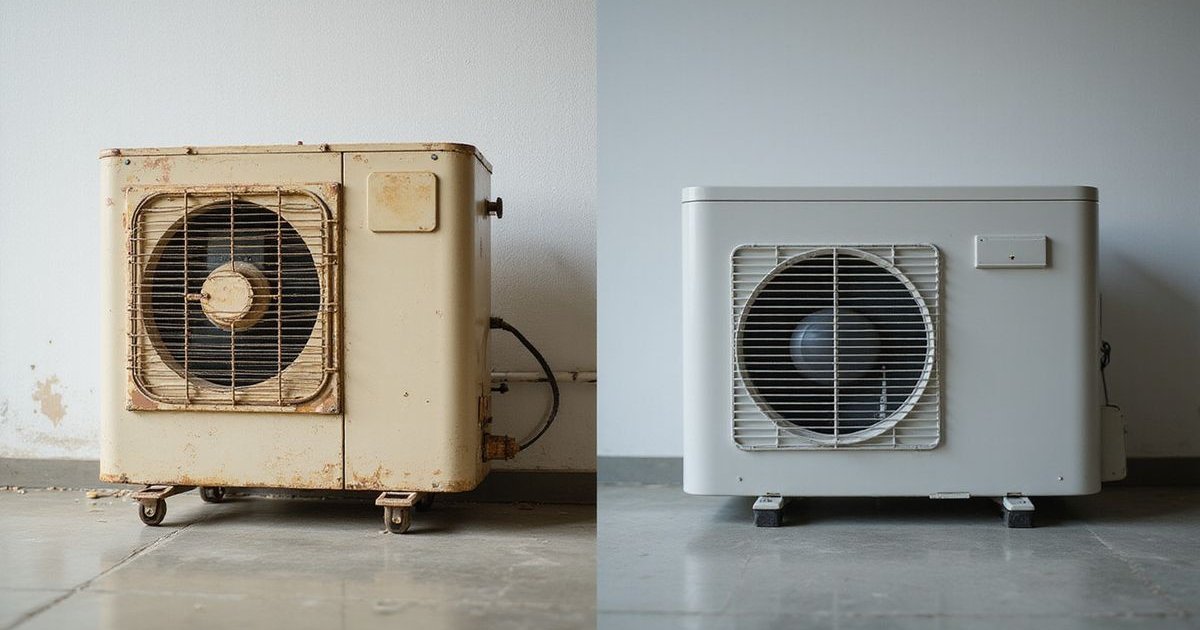
Repaired or Replace Your AC? A Practical Guide for Malaysian Homeowners
You know the feeling of walking into a cool room after being stuck in a jam on the Federal Highway—it is absolute bliss.
But when your air conditioner suddenly blows warm air or starts leaking water, that relief turns into stress.
The technician hands you a quote, and you are left staring at the numbers.
Should you fix this old unit or just get a new one?
We help homeowners in Kepong and Mont Kiara make this decision every single day.
This guide breaks down exactly how to decide based on current 2026 costs and local factors.
The Quick Rule: The RM1,000 Threshold
A common guideline in the Malaysian HVAC industry is the “50% Rule,” but we like to add a hard cap to it.
You should strongly consider replacement if:
- The Repair Cost is > 50% of a new unit’s price.
- The Unit is > 8 years old and the repair exceeds 30% of a new price.
- The Repair Bill hits RM1,000 or more, regardless of the unit’s age.
Let’s look at a real-world example:
- New 1.5HP Inverter Unit: RM1,900 (Installation included)
- Repair Quote (Compressor): RM1,100 (58% of new)
- Decision: Replace immediately.
Repairing a unit at this price point is risky because other old parts may fail soon after.
Factor 1: Age of Your AC (The Tropical Context)
How Malaysia’s Weather Affects Lifespan
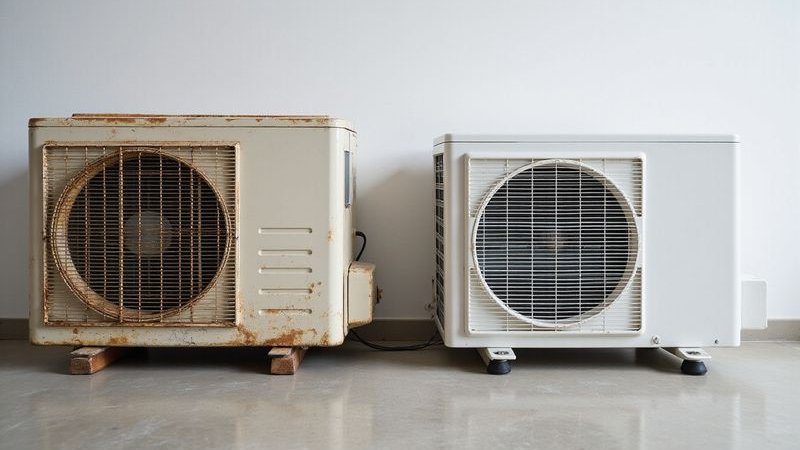
Global averages say an AC lasts 15 years, but Kuala Lumpur’s humidity tells a different story.
High moisture levels in the air accelerate corrosion on your outdoor condenser coils.
Our technicians frequently see “corrosion creep” destroying units that are only 10 years old.
Average Lifespan by Type in KL
| AC Type | Typical KL Lifespan |
|---|---|
| Window unit | 6-8 years |
| Wall-mounted (non-inverter) | 8-10 years |
| Wall-mounted (inverter) | 10-12 years |
| Cassette | 10-14 years |
| Central/ducted | 12-15 years |
Age-Based Decision Matrix
| AC Age | Recommended Action |
|---|---|
| 0-5 years | Almost always repair (often under warranty). |
| 5-8 years | Repair unless it is a compressor failure. |
| 8-12 years | Evaluate carefully; do not spend over RM500. |
| 12+ years | Lean toward replacement; parts are likely obsolete. |
Factor 2: Type of Repair Needed
Minor Repairs (Usually Worth It)
Small electrical components often fail due to power surges, which are common during our stormy seasons.
Fixing these is usually cost-effective.
| Repair | Symptom | Est. Cost (2026) | Verdict |
|---|---|---|---|
| Capacitor | Fan spins, but no cold air | RM150-250 | Yes |
| Thermistor | Blinking timer light | RM150-220 | Yes |
| Gas Top-up | Air is slightly warm (no leak) | RM120-180 | Yes |
| Indoor Fan Motor | Noisy or weak airflow | RM280-450 | Usually Yes |
| Chemical Wash | Smells musty or low airflow | RM120-180 | Yes |
Major Repairs (The Danger Zone)
These repairs often signal the “end of life” for your machine.
Proceed with caution if you see these quotes.
| Repair | Symptom | Est. Cost (2026) | Considerations |
|---|---|---|---|
| Compressor | Loud buzzing, trips breaker | RM1,000-2,200 | Replace Unit |
| PCB Board | Unit won’t turn on at all | RM400-900 | Check Age |
| Outdoor Fan | Outdoor unit gets hot/stops | RM350-600 | Check Age |
| Cooling Coil | Water dripping, hissing | RM600-1,200 | Replace Unit |
| Gas Leak (Major) | Loss of cold air in days | RM400-800 | Risky |
The Compressor Question
The compressor is the heart of your air conditioner.
Replacing it is like replacing the engine in an old Proton Saga—it rarely makes financial sense.
We only recommend compressor replacement if the unit is under 5 years old and the part is under warranty.
Otherwise, the labor cost alone justifies buying a brand new system.
Factor 3: Energy Efficiency & Electricity Bills
The “Hidden” Cost of Old Units
Electricity tariffs in Malaysia have evolved, and an inefficient AC is a silent wallet-drainer.
Newer inverter units adjust their motor speed to save power, while old non-inverters run at full blast 100% of the time.
Annual Cost Comparison (1.5HP Unit)
This calculation assumes 8 hours of usage per night at an average tariff of RM0.50/kWh.
| Era & Type | EER Rating | Annual Bill |
|---|---|---|
| 2010 (Non-inverter) | 9-10 | ~RM1,800 |
| 2015 (Non-inverter) | 10-11 | ~RM1,650 |
| 2020 (Inverter) | 13-15 | ~RM1,200 |
| 2025/26 (Inverter) | 15-18+ | ~RM1,000 |
The Payback Math
Replacing a 15-year-old non-inverter with a 2026 inverter model saves you roughly RM800 per year.
If a new unit costs RM2,500, the energy savings alone pay for the machine in just 3 years.
Staying with an old inefficient unit essentially means you are overpaying TNB every month instead of investing in your own comfort.
Factor 4: Refrigerant Type (Gas)
R22: The Phased-Out “Liquid Gold”
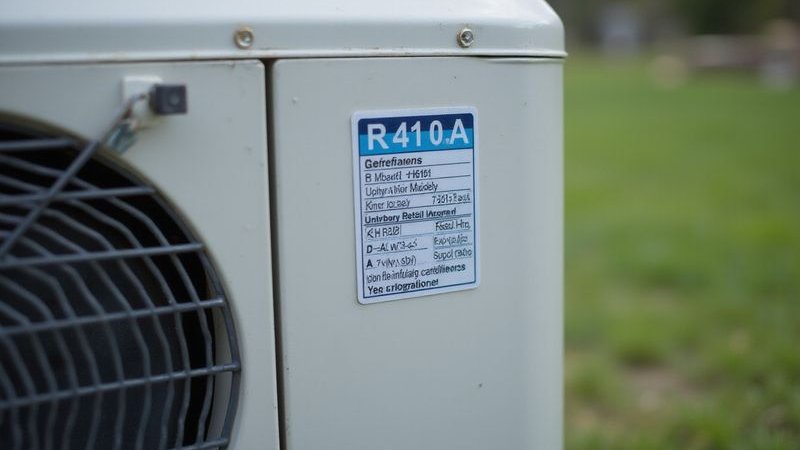
If your unit was bought before 2015, check the label on the outdoor unit for “R22”.
Malaysia has strictly phased out the import of R22 equipment, making the gas itself increasingly scarce and expensive.
We find that topping up R22 gas can now cost 30-50% more than standard gas due to supply limits.
Fixing a leak in an R22 system is rarely a smart move.
R32: The Current Standard
Modern units use R32 refrigerant.
This gas is:
- Cheaper: Readily available from all suppliers.
- Efficient: Carries heat better, lowering electricity usage.
- Eco-friendly: Has a much lower impact on global warming.
Factor 5: The “Nickel and Dime” Effect
Frequency of Repairs
Have you seen your repair technician more than twice in the last 18 months?
Repeated breakdowns are a clear sign of systemic failure.
Fixing one part puts stress on the remaining old parts, leading to a domino effect of failures.
Track Your Spending
| Year | Repair Performed | Cost |
|---|---|---|
| 2024 | Capacitor Change | RM180 |
| 2025 | Indoor Fan Motor | RM350 |
| 2026 | Gas Leak & Top-up | RM450 |
| Total | RM980 |
You have spent RM980 on a unit that is likely still old, noisy, and dirty.
That same money could have covered a 50% deposit on a brand new, whisper-quiet Daikin or Panasonic inverter.
Factor 6: Your Living Situation
When to Replace
- You own the home: You will reap the long-term energy savings.
- Noise bothers you: New units are practically silent (19dB-25dB).
- Renovating: It is cheaper to run new piping during renovation than after.
- Health issues: New models often have better filtration (e.g., Nanoe-X, Plasmacluster).
When to Repair
- Renting: Unless the landlord pays, a cheap repair is your best option.
- Moving soon: You won’t get the return on investment from a new unit.
- Tight cash flow: A RM150 repair is easier to manage right now than a RM2,000 purchase.
Decision Flowchart
Ask yourself these questions in order to reach a verdict:
-
Is it under warranty?
- Yes? → Repair (Let the manufacturer pay).
- No? → Go to next step.
-
Is the repair > RM1,000?
- Yes? → Replace immediately.
- No? → Go to next step.
-
Is the AC older than 10 years?
- Yes? → Replace (Energy savings will pay for it).
- No? → Go to next step.
-
Does it use R22 gas?
- Yes? → Replace (Don’t invest in obsolete tech).
- No? → Repair is likely safe.
What About Just Buying New?
Sometimes you don’t need a breakdown to justify an upgrade.
Many Kepong homeowners upgrade simply for better sleep.
Top Reasons to Upgrade Early
- Inverter Tech: Switching from non-inverter to inverter drastically cuts bills.
- Wrong Sizing: If your room takes forever to cool, your current unit is likely undersized (e.g., 1.0HP in a large master bedroom).
- Smart Features: WiFi control lets you turn on the AC before you arrive home.
The Value Proposition
Replacing a working but old unit:
- Eliminates the risk of a breakdown during a heatwave.
- Lowers your monthly commitments to TNB.
- Resets your warranty coverage for the next 5-7 years.
Get Professional Advice
Unsure if your unit is worth saving?
We provide honest assessments for homeowners in Kepong, Mont Kiara, and Desa ParkCity.
WhatsApp us at 012-2252 623 for a transparent consultation.
Our team will:
- Inspect the unit to identify the root cause.
- Provide a clear, itemized repair quote.
- Tell you frankly if we would buy a new one in your shoes.
We waive our RM50 diagnostic fee if you proceed with any repair or new installation.
Your comfort is our priority, and we want you to have a system that works when you need it most.