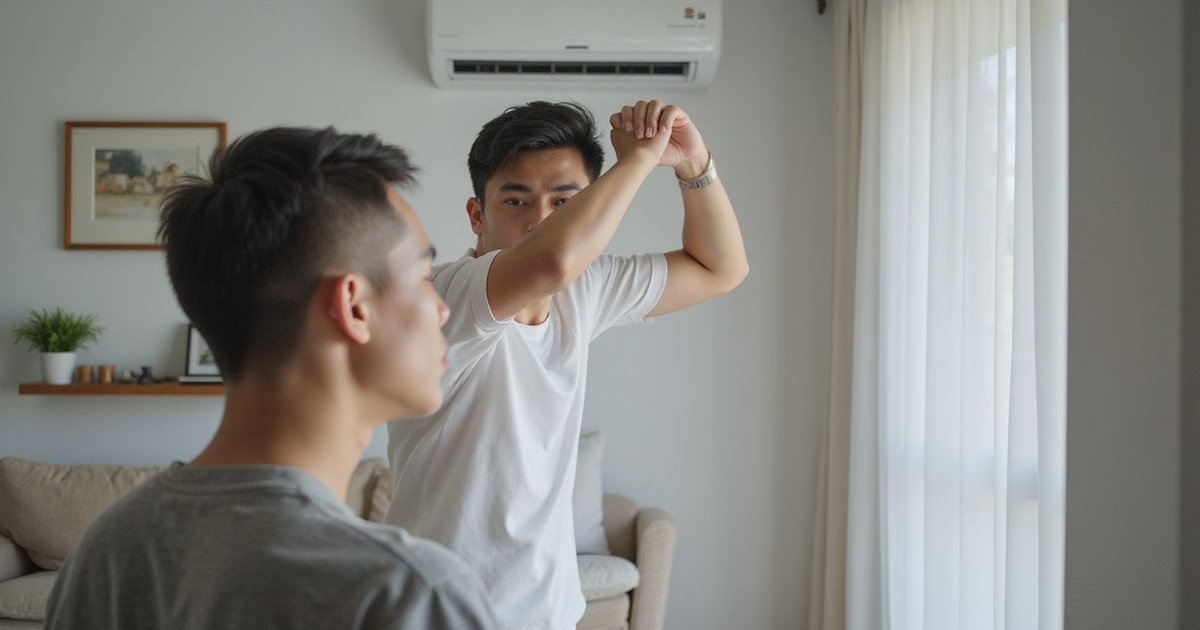
There is nothing more frustrating than turning on your air conditioner during a sweltering Malaysian afternoon only to feel warm air coming from the vents. You expect relief from the humidity, but instead, you get a glorified fan circulating hot air.
If your AC is running but not cooling, don’t panic. This ranks as one of the most common AC repair cases we encounter in Kuala Lumpur, and many causes have straightforward solutions.
In this guide, we will walk through the six most common reasons your aircond might be blowing warm air and what you can do about each one.
1. Dirty Air Filters
The most common cause of poor cooling is actually something you can fix yourself in minutes.
Why It Happens
Air filters trap dust, pet dander, and pollutants to keep your indoor air clean. When they get clogged, they restrict airflow over the evaporator coil. Less airflow means the system cannot extract heat effectively. Your AC might blow air, but that air won’t be cold because the cycle is choked.
Signs It’s Your Filter
- Weak Airflow: Put your hand near the vent; if the breeze feels faint, the intake is likely blocked.
- Dusty Smell: You might notice a stale or musty odor when the unit first kicks on.
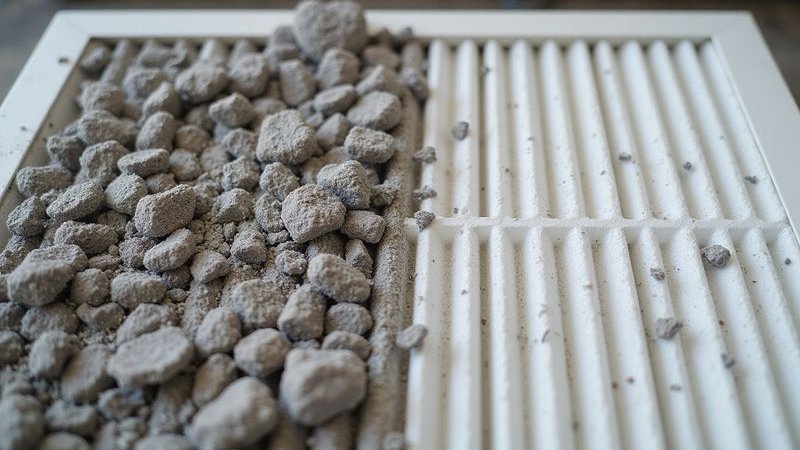
- Visible Grime: Open the front panel and look for a grey, fuzzy layer on the mesh.
Pro Tip: In humid climates like ours, dust often mixes with moisture to create a “jelly” substance that sticks to filters. A simple shake isn’t enough to clean this.
The Fix
- Turn off your AC.
- Lift the front cover carefully.
- Slide out the mesh filters.
- Wash them with water (a gentle spray works best; avoid harsh soaps).
- Let them dry completely in a shaded area before reinserting.
Cost: Free (DIY)
Prevention tip: Clean filters every 2-4 weeks for optimal performance, especially during haze season or if you live near construction zones like those in Kepong or Mont Kiara.
2. Low Refrigerant (Gas)
If your AC is low on refrigerant gas, it simply cannot cool effectively. The system will run, but the chemical reaction needed to remove heat cannot happen.
Why It Happens
Refrigerant does not get “used up” like petrol in a car. If the levels are low, there is almost certainly a leak in the closed-loop system. Leaks commonly occur at:
- Pipe connections (flare nuts)
- The evaporator coil (indoor unit)
- The condenser coil (outdoor unit)
- Service valves
Signs It’s Low Gas
- Hissing Sounds: A distinct hissing or bubbling noise from the indoor unit often indicates an active leak.
- Continuous Running: The compressor never shuts off because it can never reach the target temperature.
- High TNB Bills: Your electricity usage spikes significantly because the unit is working overtime.
The Reality of “Top-Ups”
Many homeowners believe a yearly “top-up” is normal maintenance.
We advise against this mindset. A properly installed system should hold its gas for years. If you need gas, you have a leak that needs repairing, not just refilling.
The Fix
You will need a professional for this task. The technician will:
- Attach pressure gauges to check PSI levels (typically for R32 or R410A gas).
- Locate the leak using bubble solution or electronic detectors.
- Repair the flare nut or weld the leak.
- Top up the gas to the manufacturer’s specified weight.
Cost: RM80-200 for top-up (Often included FREE with a full chemical wash at our shop).
3. Frozen Evaporator Coil
It sounds contradictory in our tropical heat, but your AC can actually freeze up. A block of ice on the coil acts as an insulator, preventing the refrigerant from absorbing heat from your room.
Why It Happens
This usually stems from an imbalance between airflow and refrigerant temperature. Common culprits include:
- Restricted Airflow: Extremely dirty filters or blocked return vents.
- Low Refrigerant: Lower pressure causes the coil temperature to drop below freezing.
- Fan Issues: A blower fan that is spinning too slowly.
Signs of a Frozen Coil
| Symptom | What It Means |
|---|---|
| Visible Ice | You see white frost or ice on the copper pipes or cooling fins. |
| Water Leaking | As the ice melts during off-cycles, it overwhelms the drainage tray. |
| Warm Air | The unit blows cold for 10 minutes, then the airflow drops and turns warm. |
The Fix
- Turn off the AC immediately. Continuing to run it can burn out the compressor.
- Turn on the “Fan” mode (if available) to help melt the ice, or just wait for it to thaw naturally.
- Check your filters once the ice is gone.
- If the filters were clean, call a technician to check gas levels.
Cost: Free if filter-related; RM50-200 if professional diagnosis is needed.
4. Faulty Compressor
The compressor is the heart of your AC. It compresses the refrigerant and circulates it between the indoor and outdoor units. If this component fails, the entire cooling cycle stops.
Why It Happens
- Capacitor Failure: The small cylinder that gives the compressor the “jolt” to start often dies before the compressor does.
- Overheating: Dirty outdoor coils force the compressor to work too hard.
- Electrical Surges: Lightning strikes or unstable voltage can damage internal windings.
Signs of Compressor Problems
- Silence: The outdoor fan spins, but you don’t hear the deep “hum” of the compressor kicking in.
- Hard Starting: The unit shudders or makes a loud clicking sound when trying to start.
- Tripping Breakers: The AC turns on for a second and immediately trips the main DB box switch.
The Fix
This requires a professional diagnosis to distinguish between a dead compressor and a bad capacitor. Options include:
- Capacitor Replacement: A quick and affordable fix if the compressor itself is fine.
- Compressor Replacement: Usually expensive and labor-intensive.
- Full Unit Replacement: Often more cost-effective than replacing a compressor on a unit older than 8 years.
Cost: RM200-1500+ depending on whether it is a part replacement or a full compressor change.
5. Thermostat or Sensor Issues
Sometimes the mechanical parts are fine, but the “brain” of the AC is confused. If the sensor detects the wrong temperature, it will shut off the cooling prematurely.
Why It Happens
- Displacement: The sensor has been knocked away from the evaporator coil during cleaning.
- Dirt Buildup: Dust coating the thermistor changes its resistance reading.
- Corrosion: High humidity can corrode the wire connections on the control board.
Signs of Sensor Problems
- Erratic Cycling: The AC turns on and off every 2-3 minutes (short cycling).
- False Readings: The remote or display shows 24°C, but the room feels like 28°C.
- Cold Start Only: The unit starts cold but stops cooling long before the room is comfortable.
The Fix
A technician can troubleshoot this quickly with a multimeter.
- They will reposition the sensor if it was merely displaced.
- Testing the resistance (kOhms) confirms if the part is faulty.
- Replacing the thermistor is a standard repair.
Cost: RM100-300 for sensor/thermistor replacement.
6. Dirty Condenser Coil (Outdoor Unit)
The outdoor unit (condenser) has a critical job: releasing the heat absorbed from your room into the outside air. If the condenser fins are clogged, that heat stays in the system, and your room stays warm.
Why It Happens
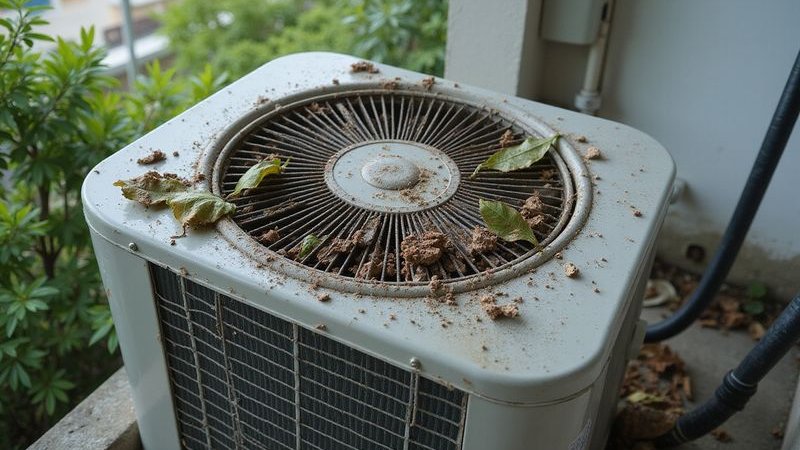
- Debris Buildup: Leaves, dirt, and dust from nearby roads clog the fine aluminum fins.
- Obstruction: Placing the unit too close to a wall or stacking boxes around it blocks airflow.
- Pests: We often find bird nests or insect hives inside the casing in residential areas.
Signs of Dirty Condenser
- Hot to Touch: The air blowing out of the outdoor unit is not just warm, but extremely hot.
- Decreased Efficiency: You notice the AC takes much longer to cool the room than it used to.
- Safety Cut-offs: The compressor overheats and shuts itself down repeatedly.
The Fix
- Clear any vegetation or items stored around the outdoor unit.
- Use a garden hose (low pressure) to gently rinse visible dirt from the fins. Do not use a pressure washer, as high pressure will bend the delicate fins.
- For a deep clean, a professional chemical wash is required.
Cost: Part of regular servicing.
What to Check Before Calling a Technician
Save yourself a service call fee by running through this quick checklist first.
- ✓ Remote Settings: Ensure the mode is set to “Cool” (snowflake icon) and not “Fan” or “Dry” mode.
- ✓ Temperature Setting: Set the temperature at least 3-5°C lower than the current room temperature to trigger the compressor.
- ✓ Air Filters: Open the cover and inspect them. If you can’t see through the mesh, clean them.
- ✓ Circuit Breaker: Check your main DB box to ensure the switch labeled “AC” or “Aircond” hasn’t tripped.
- ✓ Outdoor Unit: Listen for the fan and compressor running outside.
When to Call a Professional
While basic maintenance helps, certain symptoms indicate a deeper issue that requires specialized tools. Call a technician if:
- The problem persists even after you have cleaned the filters.
- You see ice accumulating on the indoor or outdoor unit.
- The outdoor unit is making grinding, clicking, or squealing noises.
- The AC trips your home’s circuit breaker immediately upon starting.
- You suspect a gas leak (indicated by a hissing sound or oily residue on pipes).
- The outdoor fan is not spinning at all.
Our Diagnostic Service
Not sure what is wrong? AC Service Pro offers a transparent inspection service (RM50, waived with any repair). We take pride in accurate troubleshooting rather than guesswork.
This service includes:
- Complete system inspection (indoor and outdoor).
- Gas pressure and temperature differential testing.
- Honest diagnosis and repair recommendations.
- Clear cost estimate before any work begins.
WhatsApp us at 012-2252 623 to schedule a diagnostic visit. We serve Kepong, Mont Kiara, Desa ParkCity, and surrounding areas with same-day availability.